

Why American Men Are Drawn to Nepali Women
Nepali women dating offers American men the chance to connect with some of the most genuinely warm, spiritually centered, and family-devoted women in all of South Asia. Nepal - a landlocked nation cradled between India and the Tibetan Plateau - is home to approximately 30 million people whose cultural identity has been shaped by the towering Himalayas, the birthplace of Siddhartha Gautama (the Buddha) in Lumbini, and a unique Hindu-Buddhist spiritual blend found nowhere else on Earth. In 2026, Nepali women combine this ancient heritage with a rapidly modernizing outlook, especially in Kathmandu Valley, where young women pursue university degrees, tech careers, and international connections while maintaining the deep family loyalty that defines Nepali culture.
What draws American men to Nepali women is the rare combination of genuine humility, inner strength, and emotional warmth. Nepal is one of the few countries where Hindu and Buddhist traditions coexist in perfect harmony within the same families and even the same temples. This spiritual duality gives Nepali women a distinctive perspective on love - they approach relationships with both the devotional intensity of Hindu partnership and the compassionate patience of Buddhist philosophy. For men who have grown weary of superficial connections on mainstream dating apps, a Nepali woman's authenticity and depth of character feel like discovering a hidden treasure.
Nepali women share many cultural values with their neighbors - the family-centered devotion you find in Indian women dating and the serene spiritual groundedness characteristic of Bhutanese women dating - yet they carry a uniquely Nepali resilience born from living in one of the world's most geographically challenging landscapes. A woman who grows up navigating mountain trails, monsoon seasons, and earthquake recovery develops a quiet toughness that complements her tenderness. She does not break under pressure - she adapts, supports, and perseveres.

Nepali Women Ready to Find Their Match
Browse verified profiles of Nepali women looking for meaningful, long-term relationships with American men.
Priya Adhikari
Start Chat
Anisha Tamang
Start Chat
Mina Gurung
Start Chat
Roshani Thapa
Start Chat
Sabina Rai
Start Chat
Deepa Shrestha
Start Chat
Kamala Basnet
Start ChatHindu and Buddhist Traditions in Nepali Relationships
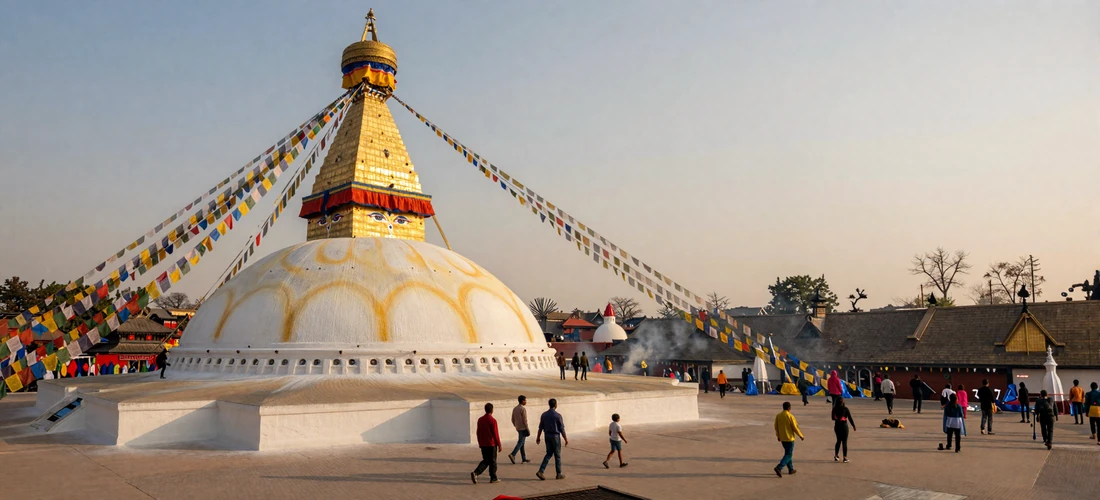
Nepal is the only country on Earth where Hinduism and Buddhism exist not just side by side but interwoven into a single cultural fabric. Approximately 81% of Nepalis identify as Hindu and 9% as Buddhist, but the boundaries between these traditions blur in daily life in ways that surprise Western visitors. Many Nepali families worship at both Hindu temples and Buddhist monasteries, celebrate festivals from both traditions, and see no contradiction in doing so. The legendary Swayambhunath stupa in Kathmandu - often called the "Monkey Temple" - is venerated by both Hindus and Buddhists, a perfect symbol of Nepal's spiritual harmony.
This dual spiritual foundation profoundly shapes how Nepali women approach love and relationships. From Hinduism, she inherits the concept of pativrata - the ideal of a devoted, loyal wife whose commitment to her husband is an expression of dharma (cosmic duty). From Buddhism, she draws compassion (karuna), mindful patience, and the understanding that genuine love requires selfless giving without expectation. The result is a partner who commits deeply yet approaches conflict with remarkable equanimity. Where other cultures might produce fiery arguments, a Nepali woman often responds with quiet strength and thoughtful resolution.
Dashain and Tihar: The Heart of Nepali Family Life
Dashain, Nepal's longest and most important festival (15 days in September-October), is the cornerstone of Nepali family identity. During Dashain, every Nepali returns to their ancestral home - flights, buses, and roads are packed with families reuniting. Elders place tika (a mixture of rice, yogurt, and vermillion) on the foreheads of younger family members and offer blessings. If your Nepali partner invites you to Dashain celebrations, she is making a profound statement about the seriousness of your relationship. Participating respectfully - receiving tika from her parents, enjoying the festival feasts, flying kites together - cements your place in her family.
Tihar (the Festival of Lights, Nepal's equivalent of Diwali) follows shortly after Dashain and includes Bhai Tika, a uniquely Nepali ceremony where sisters pray for their brothers' long life and well-being. This festival highlights the depth of sibling bonds in Nepali culture - her brothers will be some of the most important people in your relationship, and the respect between siblings is sacred. Understanding these festivals goes beyond cultural curiosity - it demonstrates that you value the spiritual rhythms that structure her entire year.
- Dashain (15-day festival): Nepal's most important celebration - receiving tika and blessings from her elders signals deep family acceptance of your relationship
- Tihar (Festival of Lights): Five-day celebration honoring relationships - Bhai Tika strengthens sibling bonds that are central to family dynamics
- Teej: A women's festival where married and unmarried women fast and pray for their husband's or future husband's well-being - deeply personal and spiritually significant
- Buddha Jayanti: Celebration of the Buddha's birth in Lumbini, Nepal - her Buddhist connections are honored alongside Hindu traditions without conflict
- Mha Puja (Newari New Year): A unique ceremony of self-worship from Newar culture - reflects the diversity of ethnic traditions within Nepal
- Daily puja (worship): Most Nepali homes have a prayer room - morning and evening rituals are not optional but fundamental to daily life
Family Loyalty as a Non-Negotiable Value
In Nepali culture, family is not simply important - it is everything. The joint family system remains the dominant household structure, particularly outside Kathmandu. Grandparents, parents, married sons and their wives, and children often live under one roof, sharing resources, responsibilities, and emotional support. A Nepali woman's parents are not peripheral figures in her romantic decisions - they are active participants whose opinions carry decisive weight. Her father's respect (izzat) and her mother's emotional approval together form the foundation upon which her marriage will be built.
The Nepali concept of afno manchhe (one's own people) defines the boundary between those who receive unconditional loyalty and outsiders. When a Nepali woman's family accepts you into their afno manchhe circle, you gain access to a support network of extraordinary depth - they will advocate for you, protect you, and include you in every celebration and crisis. However, earning this acceptance requires patience, genuine respect for family hierarchy, and demonstrated commitment. If you value the family-centered approach that characterizes South Asian relationships, you will find similar dynamics in Sri Lankan women dating, where Buddhist-Hindu cultural blends create equally devoted family structures.
Ethnic Diversity Within Nepal
Nepal is home to over 125 ethnic groups and 123 languages, making it one of the most ethnically diverse nations relative to its size. The major communities include Brahmins and Chhetris (Indo-Aryan hill groups), Newars (the indigenous people of Kathmandu Valley with a rich artistic heritage), Tamangs, Gurungs, Magars, Rais, and Limbus (Tibeto-Burman groups with distinct traditions), and Tharus and Madhesis from the Terai lowlands. Each group brings unique cultural practices, cuisine, dress, and marriage customs. A Newar woman from Lalitpur will have different engagement traditions than a Gurung woman from Pokhara or a Tharu woman from Chitwan.
This diversity means that "Nepali women dating" is not a monolithic experience - understanding which ethnic community your partner belongs to is essential for navigating cultural expectations correctly. The Newar community, for example, has elaborate marriage ceremonies with multiple stages spanning weeks. Gurung weddings feature traditional Maruni dances and distinct rituals. Asking your Nepali partner about her ethnic heritage - and learning the specific customs of her community - shows a level of cultural sensitivity that immediately elevates you above casual pursuers.
Nepali Marriage Customs and What Western Men Should Know
Marriage in Nepal is evolving rapidly. Traditional arranged marriages remain common in rural areas and among certain ethnic communities, but love marriages are increasingly accepted in urban centers like Kathmandu, Pokhara, and Biratnagar. However, even in love marriages, parental approval is considered essential - very few Nepali women will proceed without their family's blessing, regardless of how modern their outlook otherwise appears.
Arranged Marriage vs. Love Marriage: A Shifting Landscape
In traditional Nepali arranged marriages, families identify compatible partners based on caste, economic status, education, family reputation, and horoscope compatibility (kundali matching through an astrologer). The prospective bride and groom may meet only a few times before the engagement. However, the younger generation - especially educated women in Kathmandu and Lalitpur - increasingly insists on choosing their own partners. The modern compromise is the "semi-arranged" approach: the woman chooses her partner, but the family conducts their own evaluation and must give formal approval before the relationship can progress toward engagement.
For American men, this means that even when your Nepali girlfriend loves you deeply, the relationship faces a critical test when she presents you to her family. Her parents will evaluate your profession, your character, your financial stability, and - critically - your willingness to respect Nepali traditions. Being non-Nepali is not an automatic disqualifier, especially if you demonstrate genuine cultural interest and stable life circumstances. However, inter-caste or inter-ethnic marriages can face additional scrutiny from extended family members. Patience and persistence are your strongest tools.
The Swayambar and Engagement Traditions
The concept of Swayambar - a tradition where the bride chooses her own husband from a gathering of suitors - has ancient roots in Hindu culture. While the grand Swayambar ceremony is no longer practiced literally, its philosophical essence survives in the modern Nepali woman's insistence on choosing her own partner. The formal engagement process (known as magni in many Nepali communities) involves the groom's family visiting the bride's home with gifts, including fruits, sweets, clothing, and jewelry. The exchange of rings and the application of tika by the bride's parents to the groom mark the formal engagement.
- Kundali matching: Horoscope compatibility checked by a Brahmin priest - taken seriously by traditional families even today
- Magni (engagement): Formal ceremony with gift exchange between families - the groom's family must bring specific traditional items
- Sindoor (vermillion): Applied to the bride's hair parting during the wedding - the most sacred moment marking her as a married woman
- Kanyadaan: The father giving his daughter to the groom - an emotionally charged ritual considered the greatest gift a father can give
- Seven vows (Saptapadi): Walking seven steps around a sacred fire, each step representing a shared promise - the foundation of Hindu marriage
- Dowry practices: While technically illegal in Nepal since 2009, dowry expectations persist in some communities - discuss financial expectations openly and honestly with her family
The Role of Caste in Modern Nepali Relationships
Nepal's caste system, though officially abolished by the 2015 constitution, continues to influence social dynamics and marriage decisions. Brahmin and Chhetri families (the traditional upper castes) may have stronger reservations about inter-caste or international marriages. Janajati (indigenous ethnic) communities like Newars, Gurungs, and Tamangs generally have more flexible attitudes toward cross-cultural unions. The Terai communities in southern Nepal, culturally connected to neighboring Indian dating culture, carry their own distinct expectations regarding caste compatibility and marriage traditions.
Understanding where your partner's family falls within this social landscape helps you navigate conversations with sensitivity. Never dismiss caste concerns as outdated or irrelevant - for many families, these categories carry generations of identity and social meaning. Instead, demonstrate through your actions that your character, intentions, and commitment transcend social classifications.
Kathmandu's Modern Dating Scene and Evolving Attitudes
Kathmandu in 2026 is a city of vivid contrasts - ancient pagoda temples stand beside modern coffee shops, Buddhist monks share sidewalks with young software developers, and traditional arranged marriages coexist with Tinder and Bumble. The Kathmandu dating scene has transformed dramatically over the past decade, driven by rising educational levels among women (Nepal's female literacy rate has climbed to approximately 70%), growing internet penetration (over 50% of the population now uses smartphones), and the cultural influence of Nepali diaspora communities in the US, UK, and Australia who bring progressive attitudes back home.
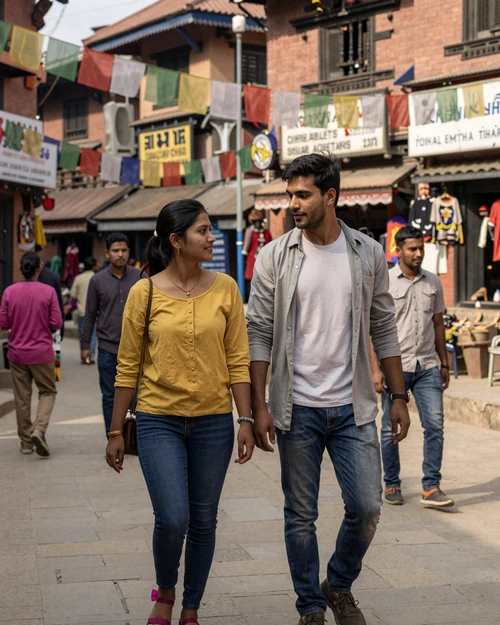
Young Nepali women in Kathmandu and Pokhara date more openly than their mothers' generation. Meeting at cafes in Thamel, attending live music events in Jhamsikhel, hiking to Nagarkot for sunrise views, or sharing dal bhat at local restaurants are all common date activities. However, public displays of affection remain culturally inappropriate - holding hands is acceptable, but kissing in public is considered disrespectful. Even the most modern Nepali woman maintains a clear boundary between private affection and public behavior, especially when family or community members might be watching.
The growing Nepali-American diaspora - estimated at over 200,000 people, concentrated in New York, Texas, Virginia, and California - has created new pathways for cross-cultural connections. Many Nepali women on international dating platforms have relatives in the US, understand American culture through media and family connections, and possess a realistic picture of what life in America entails. This cultural familiarity, combined with their deep spiritual grounding, creates a smoother transition for cross-cultural relationships than many men expect. The experience parallels what you find in Bangladeshi women dating, where diaspora connections similarly bridge the cultural gap between South Asia and America.
Practical Tips for Winning a Nepali Woman's Heart
Success in Nepali women dating requires understanding the balance between modern openness and traditional expectations. These actionable tips come from real experiences of American men who have built lasting relationships with Nepali partners.
- Learn Namaste properly: Greet her and her family with palms pressed together and a slight bow - this is not just a hello but a spiritual acknowledgment meaning "I bow to the divine in you"
- Respect dal bhat culture: Rice and lentils (dal bhat) is eaten twice daily by most Nepalis - never dismiss it as simple food. Her mother's dal bhat recipe is a source of deep family pride
- Show interest in her ethnic heritage: Ask whether she is Newar, Tamang, Brahmin, Gurung, or another group - and learn the specific customs of her community
- Be patient with family timelines: Meeting her parents may not happen for months - this is not hesitation, it is respect for the process
- Understand the role of astrology: Many Nepali families consult astrologers before major life decisions including marriage - take it seriously even if it is not your personal belief
- Avoid public intimacy: Keep physical affection private - even couples who are deeply in love avoid public displays in Nepal
- Gift-giving etiquette: Bring quality fruit, sweets, and tea when visiting her family - avoid leather goods (cow is sacred in Hindu culture)
Visa and Travel Note for Nepal: American citizens receive a visa-on-arrival at Tribhuvan International Airport in Kathmandu. Costs are $30 for 15 days, $50 for 30 days, or $125 for 90 days. A two-week trip from the US typically costs $1,500 to $3,000 including flights (usually $700 to $1,100 with connections through Doha, Delhi, or Istanbul), comfortable hotels ($25 to $80 per night), food ($8 to $25 per day), and activities. Nepal is one of the most affordable destinations in Asia. For the K-1 fiancée visa, the US Embassy in Kathmandu processes all applications, with processing times of 12 to 18 months and total costs of $5,000 to $12,000.
"The first time Sita's grandmother placed tika on my forehead during Dashain, I felt something I had never experienced on any American date - a sense of being truly welcomed into something ancient and sacred. Nepali love is not loud or flashy. It is deep, steady, and built to last a lifetime." - Jason, 41, Austin, Texas
What Makes Nepali Women Exceptional Partners
Nepali women bring a unique combination of spiritual depth, emotional resilience, and genuine warmth that distinguishes them in the international dating landscape. The following traits consistently emerge from American men who have built successful relationships with Nepali partners.
| Trait | How It Manifests | Why It Matters for American Men |
|---|---|---|
| Spiritual Groundedness | Daily puja, meditation practices, respect for both Hindu and Buddhist wisdom | Brings calm, patience, and emotional stability to the relationship - rare in modern dating |
| Family Devotion | Active care for parents, siblings, and extended family; multi-generational household harmony | You gain a partner who prioritizes family unity and sees marriage as a lifelong sacred bond |
| Resilience and Adaptability | Shaped by Nepal's challenging geography, earthquake recovery (2015), and economic hardship | She handles adversity with grace rather than panic - a partner for life's toughest moments |
| Culinary Heritage | Mastery of diverse Nepali cuisines from momo dumplings to Newari feasts to Thakali sets | Food is love in Nepali culture - her cooking is an expression of care and cultural pride |
| Genuine Warmth | Atithi Devo Bhava (the guest is God) - hospitality and warmth toward everyone she meets | Your home becomes a place of welcome, warmth, and generous spirit for friends and family |
| Educational Ambition | Rising female enrollment in universities - especially in healthcare, IT, and education | An intellectually engaged partner who values growth and contributes to household stability |
Nepali Dating at a Glance
| Detail | Information |
|---|---|
| Population | ~30 million in Nepal, 200,000+ diaspora in the US |
| Official Language | Nepali (Devanagari script); 123 languages spoken across ethnic groups |
| Dominant Religions | Hinduism (~81%) and Buddhism (~9%), often blended in daily practice |
| Top Cities for Dating | Kathmandu, Pokhara, Lalitpur (Patan), Bhaktapur, Biratnagar |
| Travel Cost from US (2 weeks) | $1,500-$3,000 including flights, hotels, food, activities |
| US Visa Requirement | Visa-on-arrival for Americans ($30/15 days, $50/30 days, $125/90 days) |
| K-1 Visa Processing Time | 12-18 months (embassy interview in Kathmandu) |
| Nepali-American Community | 200,000+ concentrated in New York, Texas, Virginia, California |
| Time Difference from US (EST) | +10 hours 45 minutes (Nepal uses a unique UTC+5:45 offset) |
Nepal produces some of the most spiritually grounded, emotionally resilient, and genuinely warm partners in South Asia. The Hindu-Buddhist cultural blend, the deep family loyalty, and the growing Nepali-American diaspora create a pathway for cross-cultural relationships that is both culturally rich and practically viable. For American men willing to embrace Nepali traditions with humility and genuine respect, the reward is a partnership built on sacred commitment, quiet strength, and the kind of unconditional devotion that the Himalayas themselves seem to inspire.
Frequently Asked Questions About Dating Nepali Women
Most Nepali families do not require religious conversion, but they expect genuine respect for their spiritual practices. Participating in festivals like Dashain and Tihar, receiving tika blessings from elders, and showing reverence at temples and monasteries demonstrate cultural sensitivity. Some traditional Brahmin or Chhetri families may prefer a Hindu partner, but many Nepali women prioritize character and commitment over religious label. Your willingness to participate in daily puja and family ceremonies matters more than formal conversion.
Family approval is a prerequisite for serious commitment in Nepali culture. Even modern, educated Nepali women consider their parents blessing essential before moving forward with marriage. Her father formal acceptance and her mother emotional endorsement together determine whether the relationship can progress. Building relationships with her parents through respectful visits, thoughtful gifts (fruit, sweets, quality tea), and genuine conversation about your intentions is not optional - it is the foundation of your future together. Without family approval, most Nepali women will not proceed regardless of personal feelings.
English is widely taught in Nepali schools, and educated women in Kathmandu and Pokhara typically speak conversational to fluent English. Women from rural areas or older generations may have limited English skills. Learning basic Nepali phrases like Namaste (hello), Dhanyabad (thank you), and Tapaiko naam ke ho (what is your name) makes a strong impression. Online translation tools and language exchange apps bridge early communication gaps effectively. Many Nepali women are eager language learners and pick up English quickly through daily conversation with their partner.
A two-week trip to Nepal typically costs between $1,500 and $3,000 from the US, including round-trip flights ($700 to $1,100 with connections through Doha, Delhi, or Istanbul), comfortable accommodations ($25 to $80 per night), food ($8 to $25 per day), and activities including trekking permits and temple visits. Nepal is one of the most affordable destinations in Asia. Visa-on-arrival for Americans costs $30 for 15 days or $50 for 30 days. The best time to visit is October through November (post-monsoon with clear Himalayan views) or March through April (spring with rhododendron blooms).
Many Nepali women are open to relocation, particularly those with family members already in the US diaspora. The Nepali-American community of over 200,000 people provides a cultural support network that eases the transition significantly. However, Nepali women are deeply attached to their families and homeland - they are not looking to escape Nepal but rather to build a life with the right partner wherever that may be. Honest conversations about where you will live, how often she can visit her family, and how you will maintain her cultural connections are essential for a successful international relationship.
The K-1 visa process for Nepali nationals follows standard US immigration procedures. File Form I-129F with USCIS, then wait 12 to 18 months for processing. Your fiancée interviews at the US Embassy in Kathmandu. You must have met in person within the past two years and provide evidence of a genuine relationship including photos, communication records, and travel documentation. Total costs range from $5,000 to $12,000 including filing fees, medical examinations, travel, and potential legal assistance. The growing Nepali community in the US provides strong support for new arrivals.
While Nepal officially abolished caste-based discrimination in 2015, caste identity continues to influence marriage decisions in many families. Upper-caste families (Brahmin and Chhetri) may have stronger reservations about inter-caste or international marriages. Janajati indigenous communities (Newar, Tamang, Gurung, Magar) tend to be more flexible. Understanding your partner specific ethnic and caste background helps you navigate family expectations with sensitivity. Never dismiss caste concerns as irrelevant - for many Nepali families, these identities carry generations of cultural meaning and social belonging.
Start Meeting Nepali Women Today
Create your free profile in under 2 minutes and connect with verified Nepali women ready for a meaningful, lasting relationship.
Join Free Now