

Bhutanese Singles Seeking Meaningful Connections
Browse verified profiles of Bhutanese women looking for genuine, long-term relationships with American men.
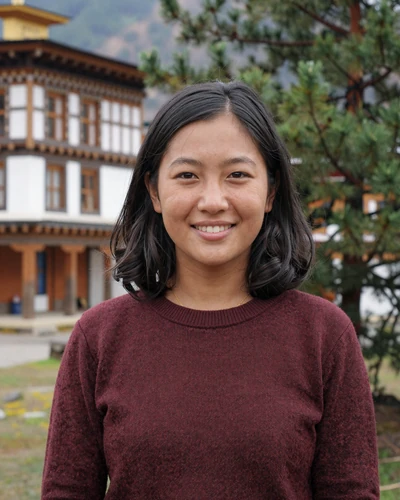
Pema Choden
Start Chat
Tshering Yangzom
Start Chat
Deki Lhamo
Start Chat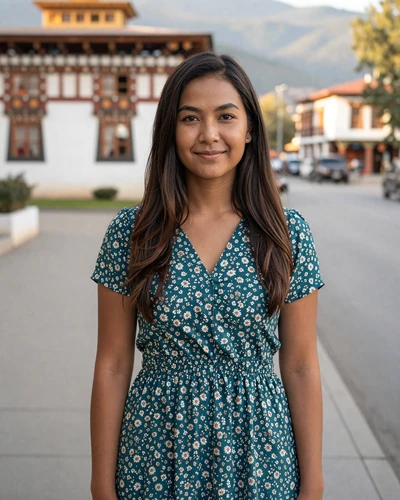
Kinley Zangmo
Start Chat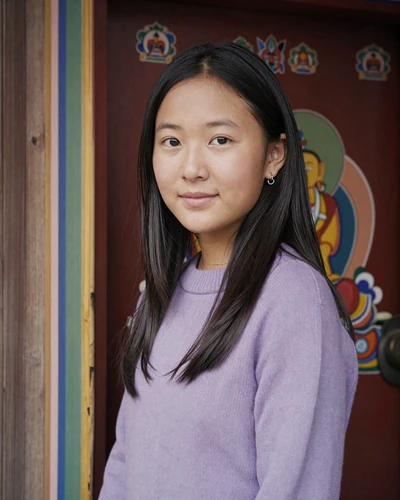
Chimi Dem
Start Chat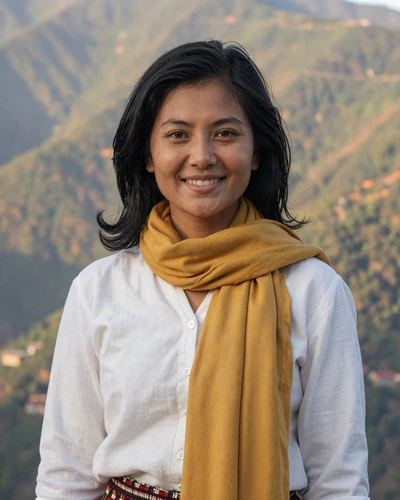
Ugyen Pelden
Start Chat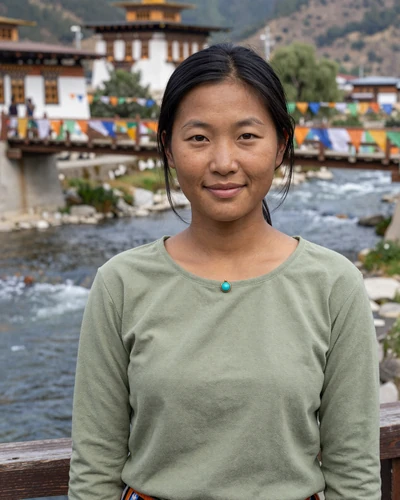
Norbu Lhaden
Start ChatWhy Bhutanese Women Are Among the Most Unique Partners in Asia
Bhutanese women dating introduces American men to partners shaped by the only country on Earth that measures success through Gross National Happiness (GNH) rather than gross domestic product. Bhutan - a landlocked Buddhist kingdom nestled in the eastern Himalayas between India and China - has a population of roughly 780,000 people, making it one of the smallest and most culturally distinctive nations in Asia. In 2026, Bhutanese women combine an ancient Buddhist worldview centered on inner peace, compassion, and community well-being with a modern education system that increasingly connects them to the outside world. For American men who are tired of the materialism and superficiality that pervade Western dating culture, Bhutanese women offer a profoundly different kind of partnership - one grounded in emotional harmony, spiritual depth, and a genuine prioritization of happiness over wealth.
What makes Bhutanese women unlike any other women in the international dating landscape is the cultural framework within which they were raised. Bhutan's GNH index - enshrined in the nation's constitution since 2008 - evaluates national well-being across nine domains including psychological well-being, health, education, time use, cultural resilience, good governance, community vitality, ecological diversity, and living standards. This is not abstract policy. It shapes how Bhutanese women think about relationships, family, and what constitutes a meaningful life. A Bhutanese woman does not evaluate a potential partner primarily by his income or social status. She evaluates whether he will contribute to her happiness, her family's harmony, and their shared sense of purpose. If you appreciate the spiritual depth and family devotion found in Nepali women dating, you will find an even more concentrated expression of these values in Bhutanese culture.
Gross National Happiness: The Philosophy That Shapes Bhutanese Relationships
GNH is not a slogan - it is the operating system of Bhutanese society. Introduced by the Fourth King Jigme Singye Wangchuck in the 1970s and formalized into constitutional law, GNH means that every government policy, every school curriculum, and every community initiative is evaluated through the lens of whether it increases collective well-being. Bhutanese women grow up within this framework. From childhood, they are taught that inner contentment matters more than material accumulation, that community bonds are more valuable than individual achievement, and that emotional balance is the foundation of a good life.
In practical terms, this philosophy produces women who are remarkably low-maintenance emotionally and materially. A Bhutanese woman is unlikely to measure your worth by your car, your watch, or your job title. She measures it by your kindness, your patience, your ability to be present in the moment, and your willingness to build a life centered on shared happiness rather than competitive acquisition. This cultural outlook creates an extraordinary compatibility with American men who have grown disillusioned with the transactional nature of domestic dating. If you value substance over spectacle and presence over performance, a Bhutanese woman may be the partner you have been searching for.
- Psychological well-being: Bhutanese women prioritize inner peace and emotional stability - meditation and mindfulness are daily practices, not wellness trends
- Community vitality: Social bonds and mutual support are considered essential to happiness - she expects a partner who values community and generosity
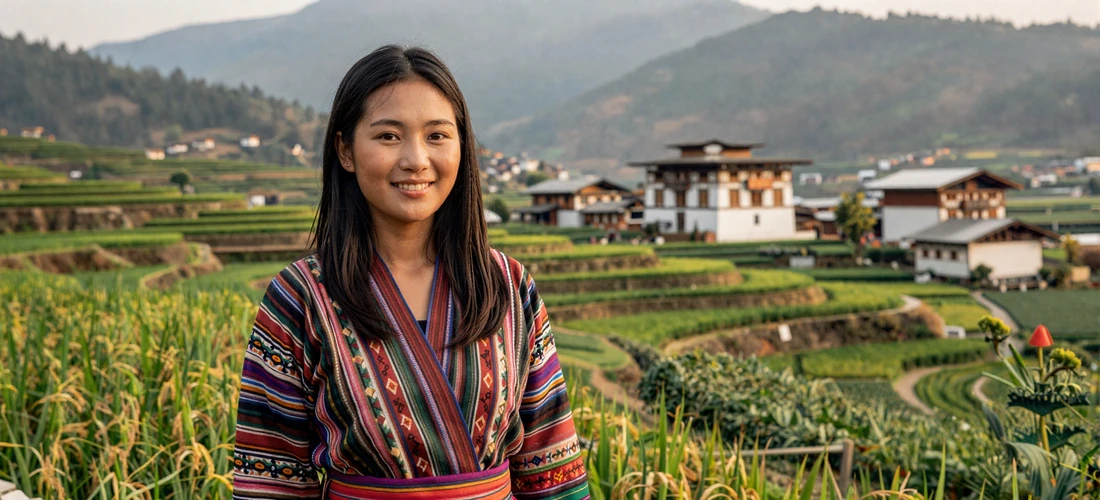
- Cultural resilience: Preserving Bhutanese traditions is a civic duty - she will wear her kira with pride and expect you to respect her cultural identity
- Ecological harmony: Bhutan is the world's only carbon-negative country - environmental consciousness is not activism, it is baseline identity
- Time use balance: Overwork is culturally discouraged - she values quality time with family and partners over career obsession
Vajrayana Buddhism: The Spiritual Heart of Bhutanese Life
Bhutan's state religion is Vajrayana Buddhism - a deeply mystical branch of Mahayana Buddhism that pervades every aspect of daily life. Monasteries (dzongs) are not historical relics in Bhutan; they are active centers of worship, education, and governance. Prayer flags flutter from every bridge and mountain pass. Butter lamps glow in household shrines. Monks chant in ornate temple halls while ordinary citizens spin prayer wheels on their morning walks. For Bhutanese women, Buddhist practice is inseparable from personal identity. It informs how she treats others, how she manages conflict, how she processes emotions, and how she approaches love.
The Buddhist concept of sem (mindfulness of thought) teaches Bhutanese women to approach relationships with careful intention rather than reactive emotion. She is unlikely to engage in dramatic arguments, passive-aggressive behavior, or emotional manipulation - these conflict styles are culturally alien. Instead, she will seek to understand your perspective, express her needs calmly, and work toward mutual resolution guided by the Buddhist principle that suffering arises from attachment and ego. This does not mean she is passive or emotionless - Bhutanese women feel deeply and love intensely - but her emotional expression is filtered through a framework of compassion, patience, and mindful awareness that many American men find profoundly refreshing after years of volatile domestic relationships.
Buddhist festivals (tshechus) are among the most important social events in Bhutanese life. These vibrant multi-day celebrations feature masked dances, religious teachings, community feasting, and social gatherings that serve as primary venues for courtship and social bonding. Attending a tshechu with your Bhutanese partner connects you directly to the spiritual and cultural heart of her world. The Paro Tshechu, Thimphu Tshechu, and Punakha Drubchen are particularly magnificent - and your willingness to participate demonstrates the cultural respect that Bhutanese families most value in a foreign partner.
Bhutanese Family Structure and the Role of Women
Bhutan has one of the most gender-egalitarian traditional cultures in Asia. Unlike many neighboring countries where patriarchal structures dominate, Bhutanese society has strong matrilineal traditions - in many rural communities, property passes through the female line, and women are the primary custodians of family land and household decision-making. The concept of magpa (a husband who moves into his wife's family home) is common in rural Bhutan, reflecting a cultural framework where women hold significant domestic authority.
This matrilineal heritage produces Bhutanese women who are confident, self-reliant, and accustomed to leadership within the family sphere. She does not expect to be dominated or controlled - she expects partnership. Her family will evaluate you not by your wealth or status but by your character, your respect for their daughter's autonomy, and your willingness to integrate into family life. The Bhutanese family unit is extended and close-knit. Grandparents, aunts, uncles, and cousins often live in close proximity and participate actively in major life decisions. When you marry a Bhutanese woman, you join a warm, supportive family network that expects mutual care and contribution.
- Matrilineal inheritance: In many regions, daughters inherit family property - your partner may own land and assets independent of marriage
- Family decision-making: Major decisions are made collectively - expect input from parents, grandparents, and elder relatives on relationship milestones
- Community interdependence: Bhutanese families rely on woola (communal labor exchange) - helping neighbors is a moral obligation, not a choice
- Respectful courtship: Families expect you to demonstrate patience, sincerity, and genuine interest in their culture before granting approval
- Multi-generational living: Elders are honored and cared for within the family home - expect close relationships with her grandparents
Bhutanese Marriage Customs and Relationship Values
Marriage in Bhutan reflects the kingdom's blend of Buddhist spirituality and pragmatic social organization. Unlike many Asian cultures where elaborate rituals and rigid social hierarchies dominate the marriage process, Bhutanese marriages are comparatively flexible and family-centered - shaped more by genuine compatibility and mutual respect than by dowry negotiations or caste considerations.
Traditional vs. Modern Marriage in Bhutan
Historically, Bhutanese marriages were often arranged by families based on astrological compatibility, community standing, and practical considerations such as land consolidation and family alliances. A Buddhist lama would consult the couple's birth charts to determine auspicious dates and assess spiritual harmony. While arranged marriages still occur in rural areas, the majority of young Bhutanese women in Thimphu, Paro, and other urban centers now choose their own partners - though family approval remains an essential milestone rather than an optional courtesy.
Modern Bhutanese weddings blend Buddhist ceremonial elements with contemporary celebrations. The ceremony typically includes prayers by a lama, the exchange of white scarves (khadar) symbolizing purity and goodwill, and offerings at a household altar. Receptions feature traditional Bhutanese food, archery demonstrations (the national sport), and circle dances accompanied by folk music. The ceremonies are warm and communal rather than ostentatious - reflecting the GNH principle that authentic joy comes from shared experience, not extravagant display.
Matrilineal Traditions and Property Rights
One of Bhutan's most distinctive features is its matrilineal property system. In many communities, the eldest daughter inherits the family home and agricultural land. This tradition gives Bhutanese women a degree of economic independence and social security that is rare in South Asian cultures. For American men, this means that your Bhutanese partner is unlikely to view marriage primarily as an economic arrangement - she may already have property and family assets of her own. She is choosing you for companionship, love, and shared life purpose, not financial dependency.
Divorce and Remarriage
Bhutan has a pragmatic approach to divorce that reflects Buddhist acceptance of impermanence. If a marriage does not bring happiness to both partners, divorce is socially acceptable and legally straightforward. There is minimal stigma attached to divorced women, and remarriage is common. This cultural attitude means that Bhutanese women enter relationships with genuine intention rather than out of social pressure - when she commits to you, it is because she genuinely believes in the partnership, not because cultural norms prevent her from leaving.
- Astrological compatibility: Many families still consult a lama for birth chart analysis before formalizing engagements - approach this with respect and openness
- Khadar exchange: White ceremonial scarves symbolize purity and mutual respect - you will receive one from her family as a welcome gesture
- Buddhist blessings: A lama's prayers are central to the marriage ceremony - participate respectfully, even if Buddhism is new to you
- Communal celebration: Weddings are community events with shared food, archery, and traditional dances - your enthusiasm for participation matters deeply
- No dowry tradition: Unlike many South Asian cultures, Bhutan does not practice dowry - the relationship is based on mutual choice, not transaction
Modern Love in Thimphu - How Young Bhutanese Women Date Today
Bhutan was the last country in the world to introduce television and the internet - both arrived in 1999. This cautious approach to modernization means that Bhutan's digital transformation is still unfolding in 2026, creating a unique dating landscape where ancient traditions coexist with rapidly expanding connectivity. Thimphu - the capital city of roughly 115,000 people - is the epicenter of this cultural evolution, where young Bhutanese women navigate between their grandparents' Buddhist traditions and the global digital culture they access through smartphones and social media.
Internet penetration in Bhutan reached approximately 65% by 2025, with mobile internet being the primary access point. Young Bhutanese women in urban areas use Facebook, Instagram, and WeChat as their primary social platforms, and international dating interest is growing steadily as exposure to global culture expands. However, Bhutanese women approach online connections with the same thoughtfulness that defines their culture - they are not interested in casual swiping or superficial exchanges. They seek meaningful conversation, genuine curiosity about their culture, and clear evidence of serious intent before investing emotionally in a cross-cultural connection.
Education and Career Growth
Bhutan's education system - free and compulsory through grade 10 - has produced a generation of young women who are literate, intellectually curious, and increasingly career-oriented. The Royal University of Bhutan, established in 2003, now produces graduates in education, engineering, natural resources, and business. Many ambitious Bhutanese women pursue higher education in India, Thailand, or Australia before returning to contribute to Bhutan's development. English is the medium of instruction in Bhutanese schools from primary level, so communication barriers are far less significant than with women from many other South Asian nations.
Professional opportunities for women in Bhutan have expanded dramatically. Women serve in parliament, civil service, banking, tourism, and increasingly in Bhutan's growing IT sector. The Royal Government actively promotes gender equality, and Bhutanese women today occupy leadership positions in both public and private sectors. For American men, this means your Bhutanese partner is likely well-educated, English-speaking, and professionally capable - she brings intellectual partnership alongside emotional depth. American men who value this combination of traditional warmth and modern capability also find strong connections through Indian women dating, where a similar commitment to education and family creates deeply fulfilling cross-cultural relationships.
What Bhutanese Women Look for in a Partner
A Bhutanese woman evaluates potential partners through a distinctly Buddhist and GNH-influenced lens. The qualities she prioritizes reflect her cultural conditioning toward harmony, sustainability, and emotional well-being:
- Emotional maturity: She values calm, patient communication over aggressive pursuit - mindfulness in your approach signals compatibility
- Genuine curiosity about Bhutan: Demonstrating real knowledge of GNH, dzong architecture, or Buddhist philosophy immediately distinguishes you from casual pursuers
- Respect for nature and sustainability: Environmental consciousness is a core Bhutanese value - wasteful or materialistic behavior is a red flag
- Family orientation: She seeks a partner who will integrate into her extended family and value communal relationships
- Stability over wealth: A steady, meaningful career matters more than a high salary - she wants a partner who works with purpose, not just for money
- Cultural respect: Willingness to learn Dzongkha phrases, wear a gho (men's traditional garment) during festivals, and participate in Buddhist ceremonies
Visa and Travel Note for Bhutan: Bhutan operates a unique "High Value, Low Volume" tourism policy. All foreign visitors (except Indian, Bangladeshi, and Maldivian nationals) must book through a licensed Bhutanese tour operator and pay a Sustainable Development Fee (SDF) of $100 per person per day, effective from 2024. This makes visiting Bhutan more expensive than most Asian countries - a two-week trip from the US typically costs $4,000 to $7,000 including the SDF, accommodation, meals, guides, and flights. Druk Air and Bhutan Airlines operate flights from Bangkok, Delhi, Kathmandu, and Singapore to Paro Airport - one of the world's most challenging landings, carved between Himalayan peaks. American citizens require a visa, processed through the tourism system. For the K-1 fiancée visa to bring her to the US, processing through the nearest US Embassy (typically New Delhi, India) takes 12 to 18 months and costs $5,000 to $12,000.
"When I visited Thimphu, I expected culture shock. Instead, I found a woman who made me feel more at peace than I ever have. Pema's approach to life - mindful, grateful, patient - changed how I see everything. Bhutanese women don't just love you; they teach you how to be happier." - Kevin, 41, Colorado
Qualities That Define Bhutanese Women as Partners
Bhutanese women bring a distinctive combination of traits shaped by the kingdom's unique cultural, spiritual, and environmental values. Understanding these qualities helps American men appreciate what makes a Bhutanese partner truly exceptional.
| Quality | Cultural Root | How It Shows in Relationships | What It Means for You |
|---|---|---|---|
| Inner peace | Vajrayana Buddhist practice and daily mindfulness | Calm conflict resolution, emotional stability, and presence | A partner who does not create drama and approaches disagreements with maturity |
| Family harmony | Matrilineal traditions and extended family systems | Deep commitment to family well-being and communal decision-making | A welcoming, supportive family network that embraces respectful outsiders |
| Education and curiosity | Royal mandate for universal education and English-medium schooling | Intellectual engagement, bilingual communication, career ambition | A partner who stimulates your mind and communicates fluently in English |
| Cultural pride | GNH cultural resilience domain and national dress code | Wears kira with pride, observes Buddhist festivals, preserves traditions | A relationship enriched by one of the world's most unique living cultures |
| Gentle strength | Buddhist compassion (karuna) combined with Himalayan resilience | Compassionate nurturing alongside practical self-reliance | A partner who supports you through challenges without losing her own center |
| Environmental consciousness | Constitutional mandate for 60% forest cover and carbon-negative status | Sustainable living habits, minimal waste, respect for natural world | Shared values if you care about sustainability and mindful consumption |
The intersection of Buddhist spirituality, GNH philosophy, and Himalayan resilience produces women who approach love as a path toward mutual growth and shared contentment. For American men, the cultural distance to Bhutan is significant - but the values gap is remarkably small if you prioritize family, peace, and purpose in your own life. Men drawn to the serene strength of Bhutanese women also find similar depth through Nepali women dating and Mongolian women dating, where Buddhist heritage and resilient family bonds create equally powerful foundations for lasting love.
Key Takeaways: Why Bhutanese Women Dating Creates Extraordinary Partnerships
Bhutanese women bring an unmatched combination of Buddhist inner peace, GNH-inspired life philosophy, matrilineal confidence, and genuine warmth to cross-cultural relationships. For American men seeking a partner who values happiness over materialism and harmony over competition, Bhutanese women dating offers one of the most deeply fulfilling paths available in 2026.
✦ What You Gain
- A partner raised in the world's only Gross National Happiness culture - she defines success by well-being, not wealth
- Buddhist-informed emotional maturity and calm, mindful communication
- Matrilineal confidence - a woman who is self-reliant, property-owning, and partnering by choice
- English-language fluency from Bhutan's English-medium education system
- Access to one of the world's most pristine, culturally unique travel destinations
- A warm, extended family network built on communal care and mutual respect
✦ Common Mistakes to Avoid
- Treating Buddhism as exotic entertainment rather than her core spiritual practice
- Displaying materialism or wastefulness - GNH culture finds this deeply unattractive
- Rushing the relationship - Bhutanese women value patience and mindful progression
- Ignoring environmental consciousness - sustainability is identity, not ideology
- Underestimating the Sustainable Development Fee cost when planning your visit
- Dismissing family input on relationship decisions - collective wisdom is respected
Bhutanese Dating at a Glance
| Detail | Information |
|---|---|
| Population | ~780,000 (one of the world's smallest sovereign nations) |
| Official Language | Dzongkha (English is the medium of instruction in schools) |
| Dominant Religion | Vajrayana Buddhism (state religion, ~75% of population) |
| National Philosophy | Gross National Happiness (GNH) - constitutionally mandated |
| Top Cities for Dating | Thimphu, Paro, Punakha, Phuentsholing, Bumthang |
| Travel Cost from US (2 weeks) | $4,000-$7,000 including SDF, flights, accommodation, meals |
| Sustainable Development Fee | $100 per person per day (mandatory for all non-regional tourists) |
| K-1 Visa Processing | 12-18 months (embassy interview in New Delhi, India) |
| Internet Penetration | ~65% (mobile-first, growing rapidly since 2020) |
| Time Difference from US (EST) | +11 hours |
Bhutan produces some of the most spiritually grounded, emotionally balanced, and culturally distinctive partners in all of Asia. The GNH framework, Buddhist values, and matrilineal traditions create women who approach love as a path toward mutual well-being - not as a transaction or a dependency. For American men willing to embrace Bhutan's unique worldview and invest in the deeper journey that this cross-cultural relationship requires, the reward is a partnership of extraordinary serenity, loyalty, and genuine happiness.
Frequently Asked Questions About Bhutanese Women Dating
Gross National Happiness (GNH) is Bhutan's constitutional framework for measuring national success through well-being rather than economic output. It evaluates progress across nine domains including psychological well-being, cultural resilience, and community vitality. For dating, this means Bhutanese women prioritize emotional harmony, family happiness, and inner peace over material wealth. She evaluates a partner by his kindness, patience, and ability to contribute to shared happiness - not by his income or social status. GNH shapes every aspect of how she approaches love and commitment.
Yes, though the dating pool is smaller than in larger Asian countries due to Bhutan's population of 780,000. Young urban Bhutanese women in Thimphu and Paro, particularly those who studied abroad or work in tourism and IT, are increasingly open to cross-cultural relationships. The key factors are genuine respect for Buddhist culture, patience in building trust, and demonstrating that you value happiness and harmony over materialism. Bhutanese women who connect with international platforms are specifically seeking meaningful, long-term relationships with serious partners.
Bhutan is one of the more expensive Asian destinations due to its Sustainable Development Fee (SDF) of $100 per person per day, mandatory for all non-regional tourists. A two-week trip from the US typically costs $4,000 to $7,000 total, including round-trip flights (usually $800 to $1,500 with connections through Bangkok, Delhi, or Kathmandu), the SDF, accommodation, meals, a licensed guide, and activities. All visits must be booked through a licensed Bhutanese tour operator. Despite the cost, visitors consistently describe Bhutan as one of the most transformative travel experiences of their lives.
Yes. English is the medium of instruction in Bhutanese schools from primary level, and most educated Bhutanese women speak English fluently alongside Dzongkha (the national language). Women in Thimphu and other urban areas communicate comfortably in English in professional and social settings. This English fluency significantly reduces the communication barriers that affect relationships with women from many other South Asian countries. Some Bhutanese women also speak Hindi or Nepali as additional languages.
Buddhism is central to Bhutanese identity and daily life. Your Bhutanese partner will likely maintain a household altar, observe Buddhist festivals (tshechus), practice meditation, and consult lamas for guidance on major life decisions including marriage. You do not need to be Buddhist yourself, but genuine respect for her spiritual practice is essential. Participating in temple visits, attending tshechu festivals, and understanding basic Buddhist concepts like compassion (karuna), mindfulness (sem), and impermanence (mi tag pa) demonstrates the cultural sensitivity that Bhutanese families expect from a foreign partner.
Since there is no US Embassy in Bhutan, K-1 visa processing for Bhutanese nationals occurs at the US Embassy in New Delhi, India. File Form I-129F with USCIS, then wait 12 to 18 months for processing. Your fiancée will need to travel to New Delhi for her visa interview. You must have met in person within the past two years, which requires planning your Bhutan visit through a licensed tour operator. Total costs range from $5,000 to $12,000 including filing fees, travel, medical examination in India, and potential legal assistance.
Bhutanese families evaluate foreign partners based on character, patience, and cultural respect rather than wealth or status. They expect you to show genuine interest in Buddhist traditions, participate in family gatherings, and treat elders with deep reverence. In many Bhutanese communities, the wife's family holds significant property and decision-making authority due to matrilineal traditions. Family approval is important but typically less formal than in many other Asian cultures. Demonstrating emotional maturity, environmental consciousness, and a willingness to learn Dzongkha phrases will significantly accelerate family acceptance.
Bhutan and Nepal share Himalayan geography and Buddhist influences, but key differences exist. Bhutan is wealthier per capita with stronger government infrastructure and the GNH framework that uniquely shapes women's values. Nepal has a larger Hindu influence alongside Buddhism, creating different family dynamics. Bhutanese women tend to have more gender-egalitarian cultural norms due to matrilineal traditions, while Nepali families often follow more patriarchal structures. Both cultures prioritize family, spirituality, and genuine connection. Many American men exploring Bhutanese women dating also find deep compatibility with Nepali women dating.
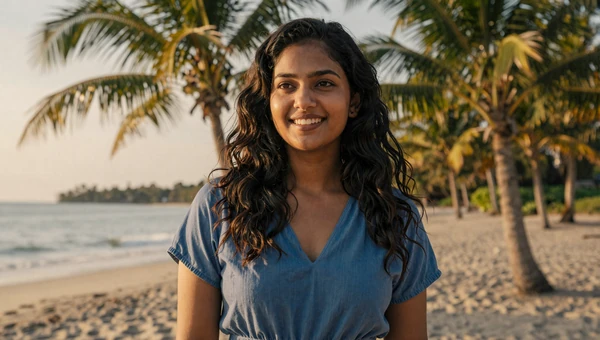
Discover Your Bhutanese Match
Create your free profile in under 2 minutes and connect with verified Bhutanese women ready for a meaningful, lasting relationship.
Join Free Now